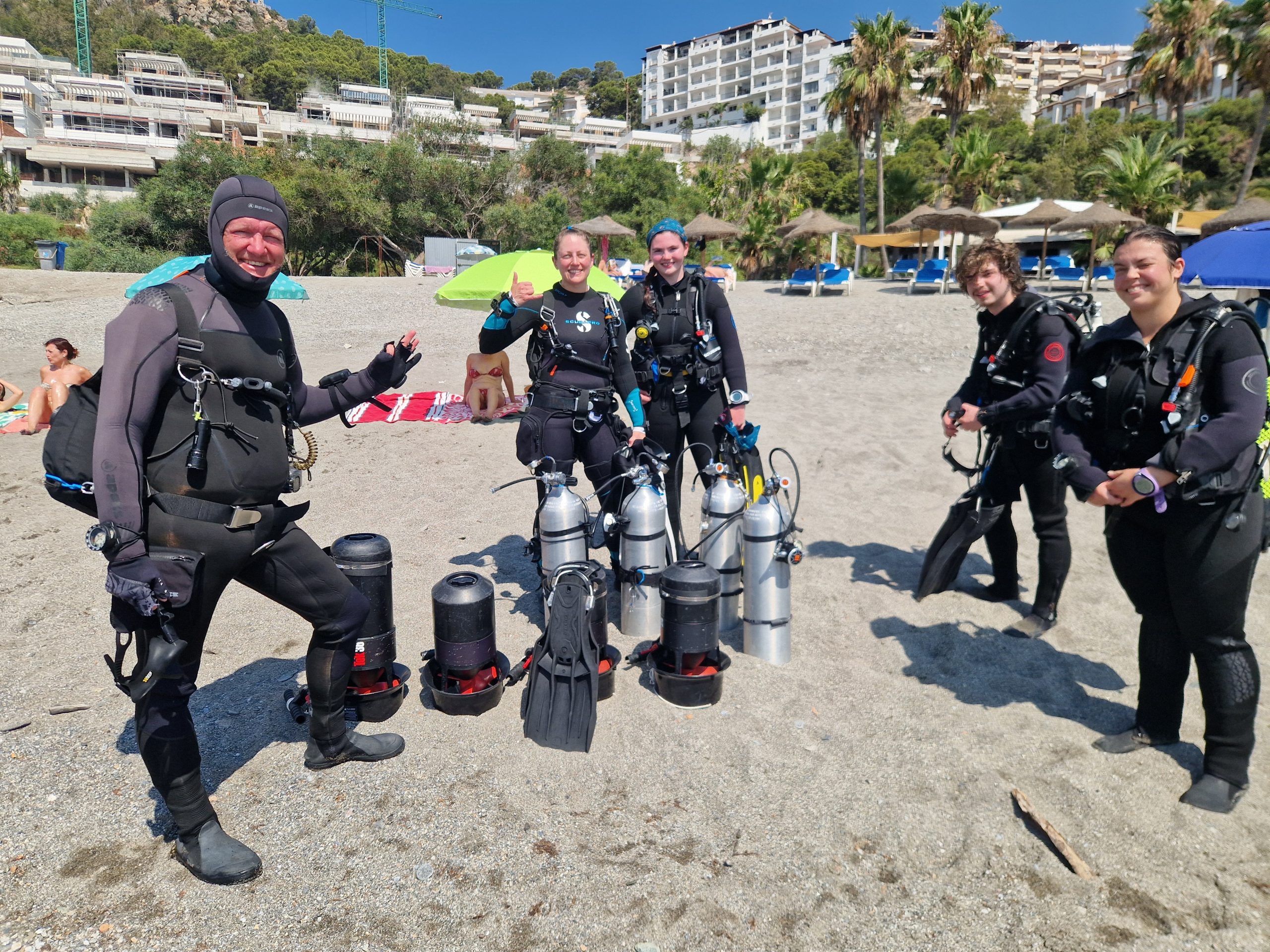
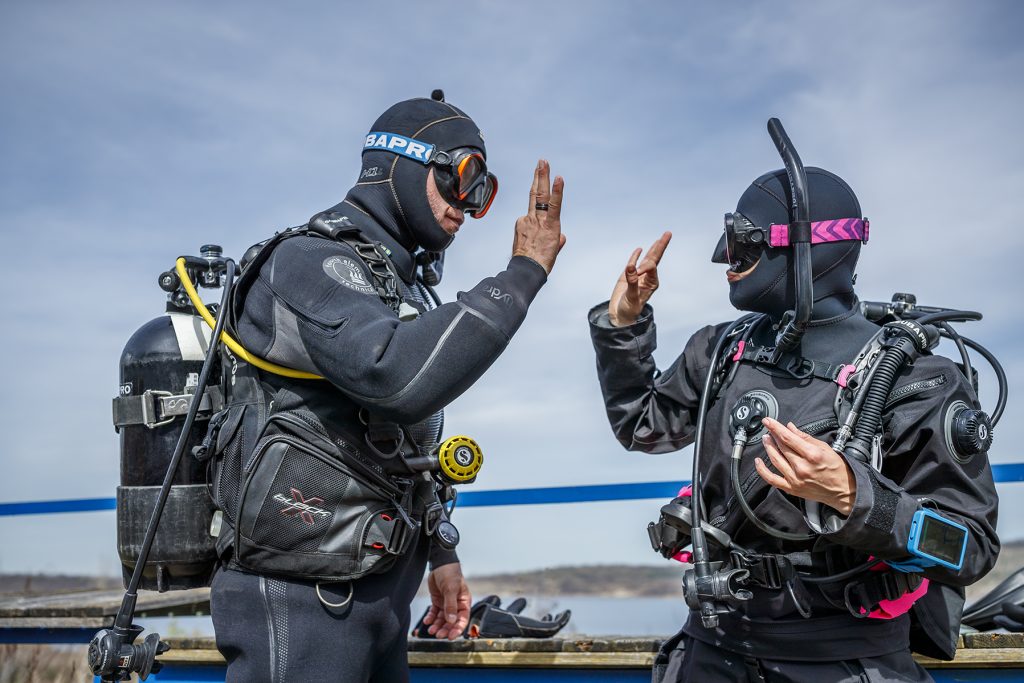
A safe and enjoyable dive begins before you enter the water.
Once you and your buddy have put on your equipment, it is important to take a few minutes to check that everything is correctly positioned, secured and functioning properly. This simple pre-dive routine is known as a buddy check.
Buddy checks are introduced during the PADI Open Water Diver course, but they should not be treated as something only new divers need to do. Whether you have completed five dives or five hundred, a thorough buddy check should be part of every dive.
Table of Contents
What is the BWRAF buddy check?
Many divers use the acronym BWRAF to remember the main stages of a pre-dive safety check:
B – BCD
Check that your buddy’s BCD inflates and deflates correctly.
Make sure the low-pressure inflator hose is properly connected and identify where the inflation, deflation and dump valves are located. You should also understand how your buddy’s BCD works in case you need to assist them during the dive.
W – Weights
Confirm that both divers are wearing the correct amount of weight and that all weights are properly secured.
You should know whether your buddy is using a traditional weight belt, integrated weight pockets or another weighting system. Most importantly, make sure you understand how their weights can be released in an emergency.
R – Releases
Check that all straps, buckles and releases are securely fastened.
Make sure nothing is twisted, trapped or positioned incorrectly. Both divers should know how to operate each other’s releases, including the BCD buckles, tank strap and weight-release system.
A – Air
Confirm that both air supplies are fully open and working correctly.
Each diver should take several breaths from their primary regulator while watching the pressure gauge. The needle should remain stable while breathing.
Test the alternate air source as well, and make sure both divers know where it is located and how it should be used.
F – Final Check
Complete one final inspection before entering the water.
Check that masks, fins, computers and any additional equipment are ready. Secure loose hoses and accessories, confirm the planned entry procedure and make sure both divers are comfortable and prepared.
Divers use different phrases to remember BWRAF, including:
- Begin With Review And Friend
- Bruce Wills Rocks All Films
- Big White Rabbits Are Fluffy
The phrase itself is not important. What matters is completing every stage of the check.
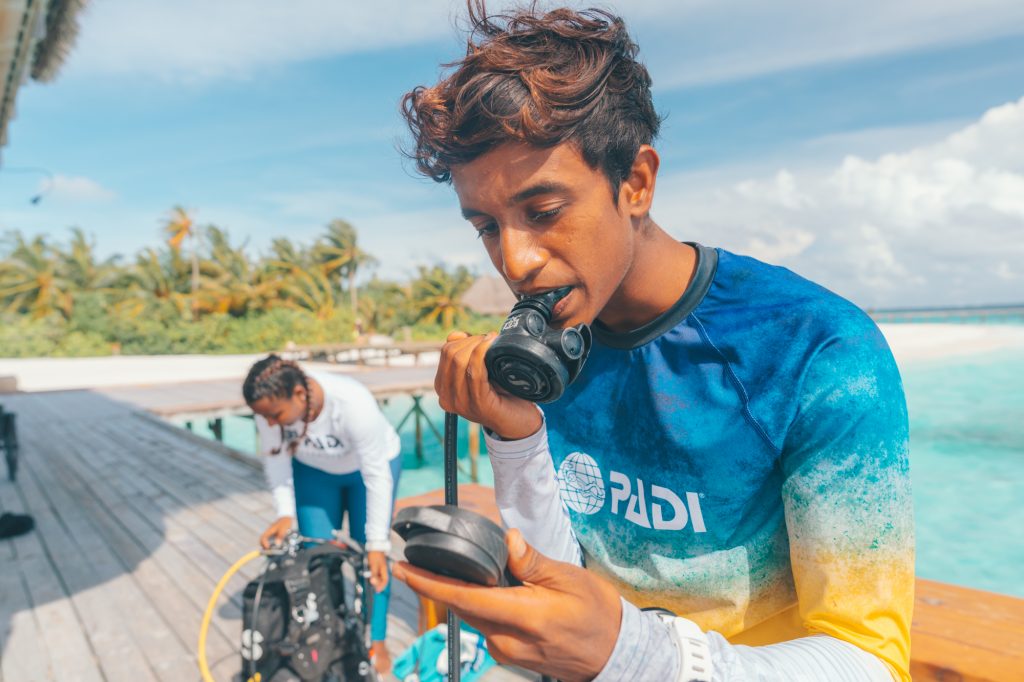
It helps you focus before the dive
Diving is meant to be enjoyable. Before a dive, people may be talking, joking, preparing cameras or watching what is happening around the boat or shore.
A buddy check creates a clear transition between preparing for the dive and being ready to enter the water. It gives both divers a moment to slow down, concentrate and focus on safety.
This can be especially helpful for newer divers who may be feeling nervous or overwhelmed while putting on their equipment.
You need to understand your buddy’s equipment
Not every diver uses the same equipment configuration.
Your buddy may use integrated weights while you use a weight belt. Their alternate air source might be attached differently, or they may have a different style of BCD, regulator or release system.
During an emergency, there may not be enough time to work out how unfamiliar equipment functions. A buddy check allows you to become familiar with your buddy’s setup before entering the water.
This is particularly important when diving with a new buddy, using rental equipment or trying a different equipment configuration.
Equipment can change between dives
Equipment working correctly on the previous dive does not guarantee that it will work perfectly on the next one.
A hose may not have been connected properly. A tank valve could be only partially open. A weight pocket might not be fully secured, or a small leak may have developed during equipment setup.
Conditions can also change between dives. Entry procedures, currents, visibility and the equipment you are carrying may all be different.
Treating every dive as a new dive helps prevent complacency and encourages you to check each part of your setup properly.
Buddy checks catch simple mistakes
Divers are human, and humans sometimes forget things.
Common pre-dive mistakes can include:
- Forgetting to insert integrated weights
- Leaving the air supply closed or partially open
- Failing to connect the BCD inflator hose
- Incorrectly securing the tank strap
- Forgetting a mask, fins or dive computer
- Leaving hoses or accessories unsecured
Most of these problems can be corrected quickly before entering the water. Once the dive has begun, however, they may lead to unnecessary stress, an aborted dive or a more serious situation.
Even experienced divers and dive professionals can make mistakes, particularly during busy diving days. Checking each other’s equipment provides an additional layer of protection.
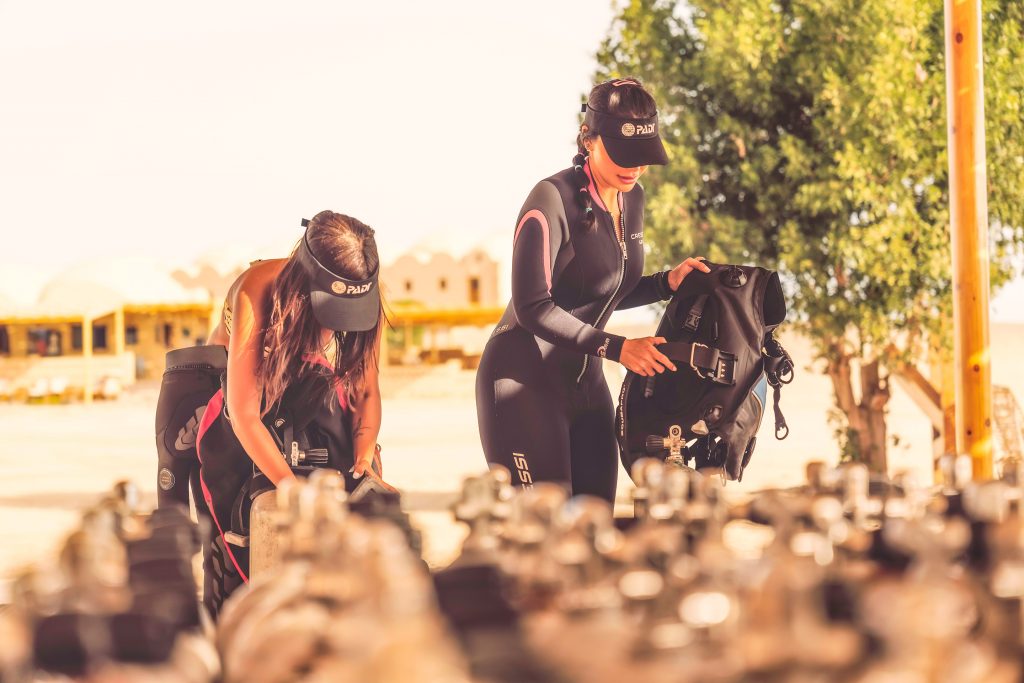
It encourages shared responsibility
Your Divemaster or instructor may supervise the group and help organise the dive, but every diver is still responsible for checking their own equipment and working with their buddy.
You should never assume that somebody else has checked your tank, opened your valve or confirmed that your equipment is functioning correctly.
A proper buddy check creates shared responsibility. You check your buddy, your buddy checks you, and both of you confirm that you are ready before entering the water.
Two sets of eyes are always better than one.
A few minutes can protect the entire dive
A buddy check does not take long, but it can prevent equipment problems, reduce stress and help both divers feel more confident.
Never allow experience, excitement or time pressure to become a reason for skipping it. The best divers are not the ones who rush into the water first. They are the ones who take responsibility for themselves, support their buddy and consistently follow safe diving practices.
Before every dive, remember:
BCD. Weights. Releases. Air. Final check.
Those few minutes could save your dive — and in an emergency, they could do much more than that.
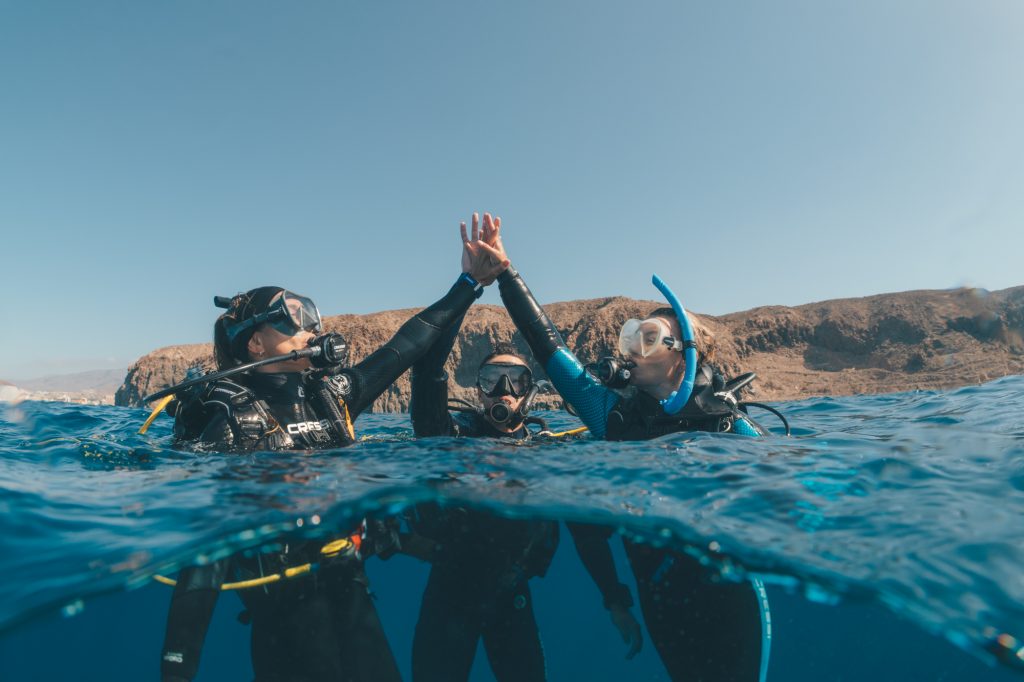
At Diving with Nic, safety is always at the heart of every course and guided dive. Before every dive, we do a safety briefing to make sure everyone understands the plan, procedures and what to expect underwater.
Whether you are taking your first breaths underwater or joining us as an experienced diver, we encourage everyone to slow down, complete a proper buddy check and start every dive the right way.
Ready for your next underwater adventure? Join our team and discover the Costa del Sol safely.