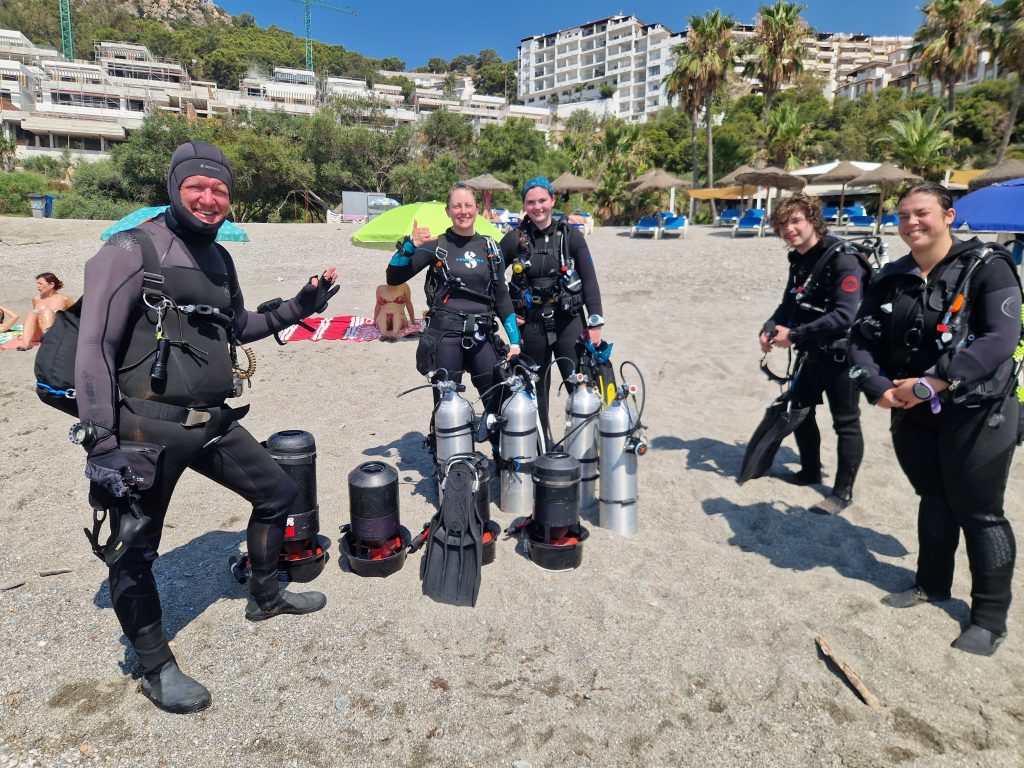
Summer might be coming to an end, but your diving definitely doesn’t have to.
When September arrives and the beaches start getting quieter, many people assume that scuba diving on the Costa del Sol starts winding down too.
In reality, autumn can be one of the best times of the year to get underwater.
The sea is still holding onto much of its summer warmth, the busiest part of the season is behind us and there is still plenty happening below the surface.
But there’s another reason we particularly like this time of year.
Autumn is a great opportunity to stop simply collecting dives and start becoming a better diver.
Whether that means taking your Advanced Open Water course, learning a new specialty, becoming a Rescue Diver or even taking your first steps towards working professionally in diving, there is no reason to wait until next summer.
Table of Contents
The water is still warmer than you might think
One of the biggest misconceptions about autumn diving is that the water suddenly becomes cold as soon as September ends.
Luckily, the Mediterranean doesn’t work quite that quickly.
The sea has spent the whole summer warming up, so comfortable diving conditions can continue well into autumn. As the season progresses, you might need to swap your thinner summer wetsuit for something a little warmer, but that certainly doesn’t mean it is time to pack your dive gear away.
And if you spent the summer learning to dive, autumn gives you something even more valuable:
the chance to keep going while everything you learned is still fresh.
Rather than completing your Open Water course on holiday and then waiting months before your next dive, autumn is a great time to build more experience and confidence underwater.
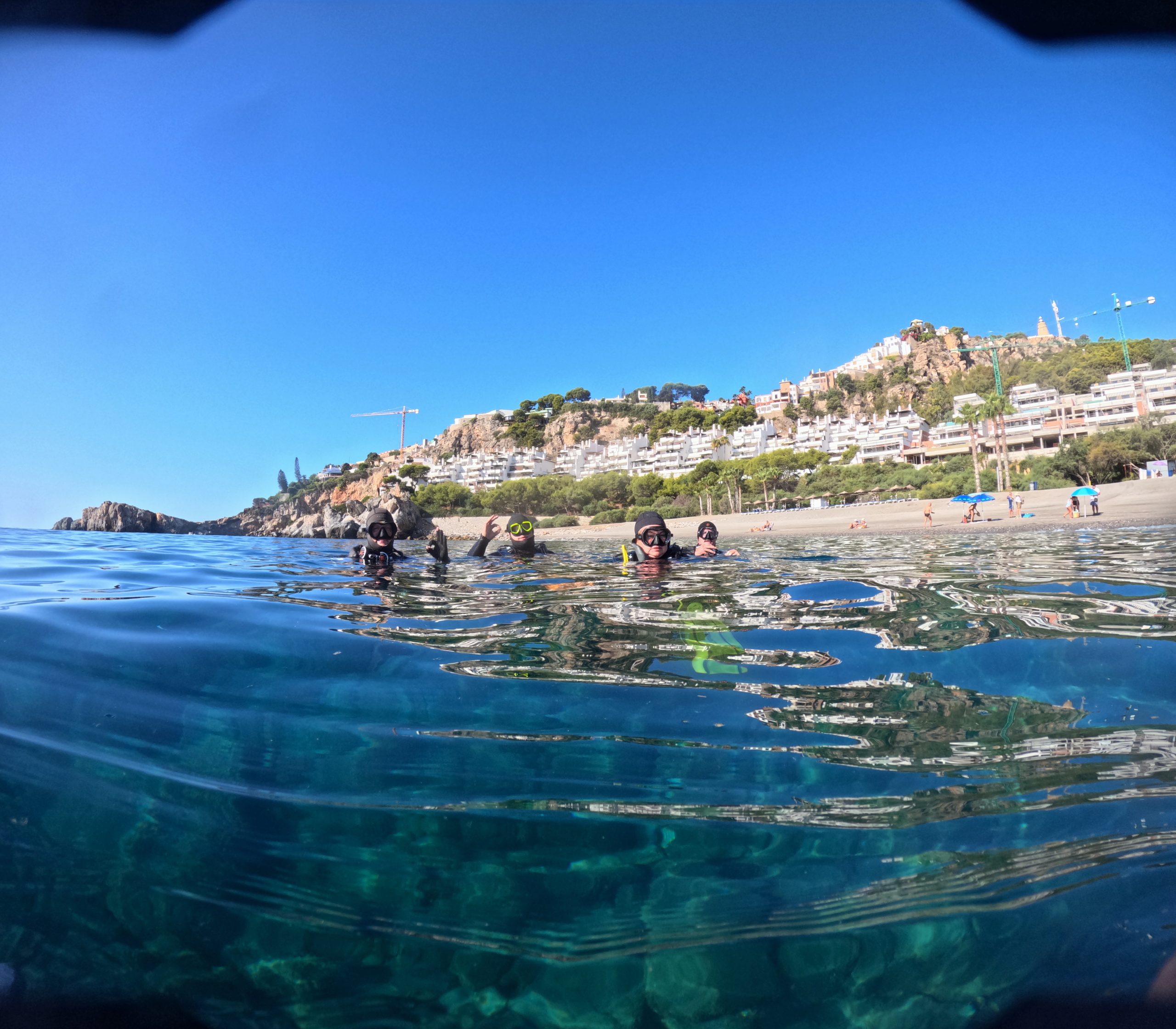
Less summer rush, more time to focus on your diving
Summer on the Costa del Sol can get busy.
There are holidaymakers, Discover Scuba Diving sessions, new Open Water students and certified divers all trying to make the most of their time in Spain.
By autumn, things start to settle down.
That slightly more relaxed pace makes this time of year particularly good for divers who want to focus on developing their skills.
Maybe your buoyancy still needs some work.
Maybe navigation is something you’ve never felt completely confident with.
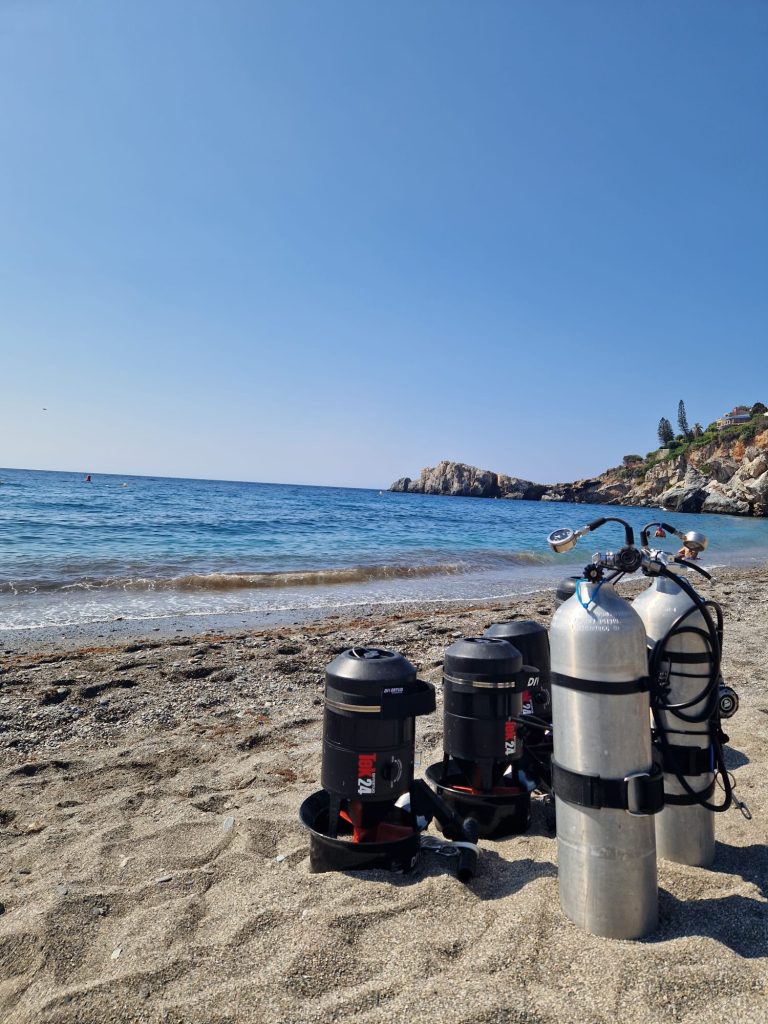
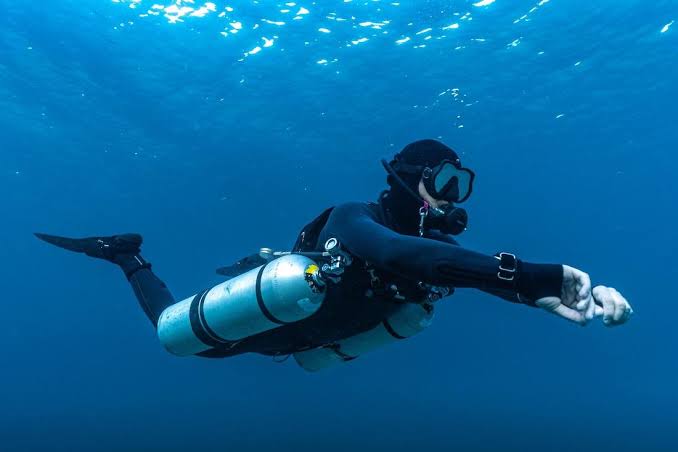
Maybe you want to learn how to use a DPV, try sidemount or start exploring deeper dives.
Or maybe you’ve simply reached the point where you’re thinking:
What’s next?
That is where continuing your training can completely change your diving.
Just finished Open Water? Advanced might be your next step
For many divers, the PADI Advanced Open Water Diver course is the natural next step after Open Water.
Despite the name, you don’t need to already be an “advanced” diver before starting it.
The course is about gaining more experience while trying different types of diving under the supervision of an instructor.
It gives you the opportunity to develop your skills, build confidence underwater and start discovering which areas of diving interest you most.
It is also a good chance to move beyond concentrating solely on the basics and begin becoming a more independent and capable diver.
If you got certified during the summer, autumn is a great time to keep that momentum going rather than waiting until next season.
Find the type of diving you actually love
One of the best things about becoming a more experienced diver is realising just how many different directions scuba diving can take you.
That’s where PADI Specialties come in.
You might want to improve a practical skill such as buoyancy or navigation.
You might be interested in extending your dive time with Nitrox.
Or perhaps you want to completely change the way you dive by learning Sidemount, trying a DPV, developing your wreck-diving skills or exploring another specialty that opens up a new side of diving.
Autumn is a great time to pick something you have always wanted to improve and dedicate a few dives to learning it properly.
Sometimes the best way to make diving more exciting isn’t travelling somewhere new.
It’s learning something new.
Ready for a bigger challenge? Become a Rescue Diver
For many divers, Rescue Diver is one of the courses that changes the way they think underwater.
Instead of focusing only on yourself, you start developing greater awareness of the divers around you.
You learn how to recognise potential problems, manage stressful situations and respond more confidently when something doesn’t go according to plan.
It is challenging, practical and very different from the courses that come before it.
And if you have spent the summer building experience, autumn can be a great opportunity to put those skills together and take the next step.
Rescue is also an important stage for anyone who is beginning to think about moving into professional diving, because it forms part of the pathway towards becoming a Divemaster.
Thinking about going professional?
For some divers, “leveling up” eventually becomes something much bigger.
If you have reached the point where you want scuba diving to become more than a hobby, becoming a PADI Divemasteris your first step into professional diving.
At Diving with Nic, you can complete your training through our Divemaster Internship, which is designed to give you experience inside a real working dive centre rather than simply completing the minimum course requirements.
The internship typically lasts 4–8 weeks and is available year-round from our dive centre in Mijas.
During that time, you work alongside our experienced team and gradually take on more responsibility. Interns assist with PADI courses, prepare diving activities and equipment, support divers above and below the surface and learn what happens behind the scenes of a professional dive operation.
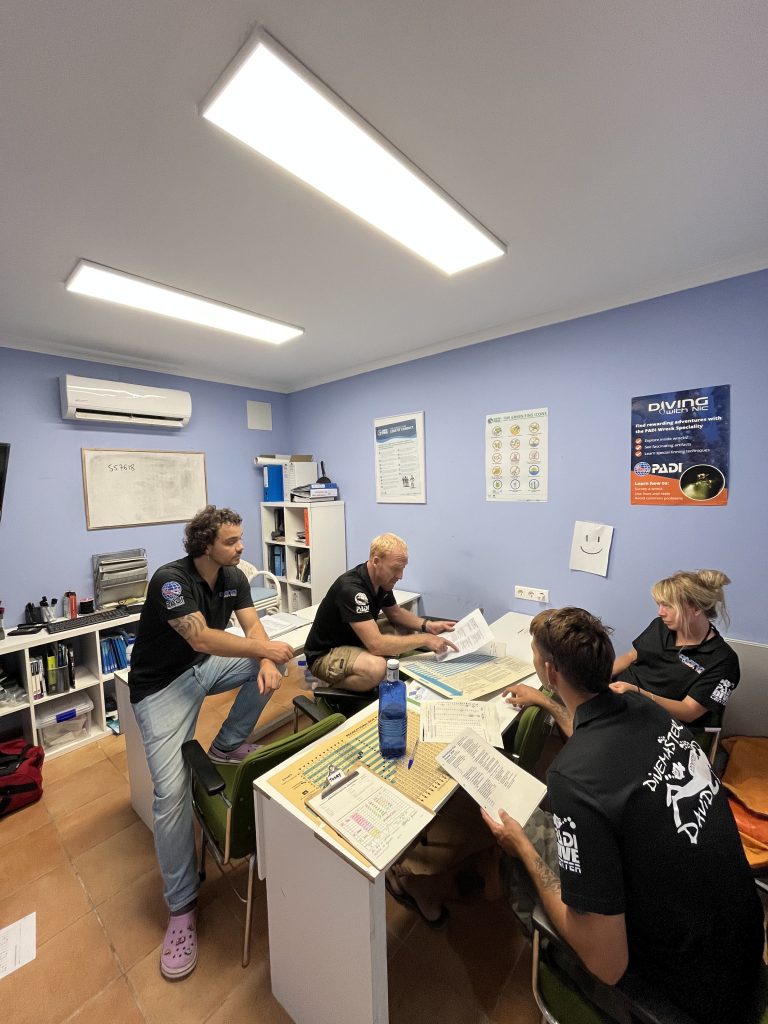
The programme also focuses on developing the skills you need as a dive leader. That includes planning and organising diving activities, delivering professional dive briefings, guiding and supervising certified divers, developing demonstration-quality skills, practising rescue and emergency management, and completing search, recovery and deep-diving scenarios.
You also gain experience with the day-to-day operation of a dive centre, including equipment preparation, cylinder logistics and customer service.
It is an important distinction.
Becoming a good Divemaster is not simply about being a good diver. It is about learning how to look after other divers, communicate clearly, anticipate problems and become someone the rest of the team can rely on.
The Divemaster Internship itself is free, with candidates only paying the required PADI training materials and registration fees.
To begin the internship, you need to be at least 18 years old, hold a PADI Rescue Diver certification or equivalent with at least 40 logged dives, have a current recognised CPR/First Aid qualification and a medical confirming that you are fit to dive.
Once qualified, a PADI Divemaster can guide certified divers, deliver dive briefings, assist PADI Instructors and continue progressing towards becoming a PADI Instructor.
And if you’re already a Divemaster and ready to take things even further, this autumn brings another opportunity.
Want to become a PADI Instructor? Our next IDC is this November
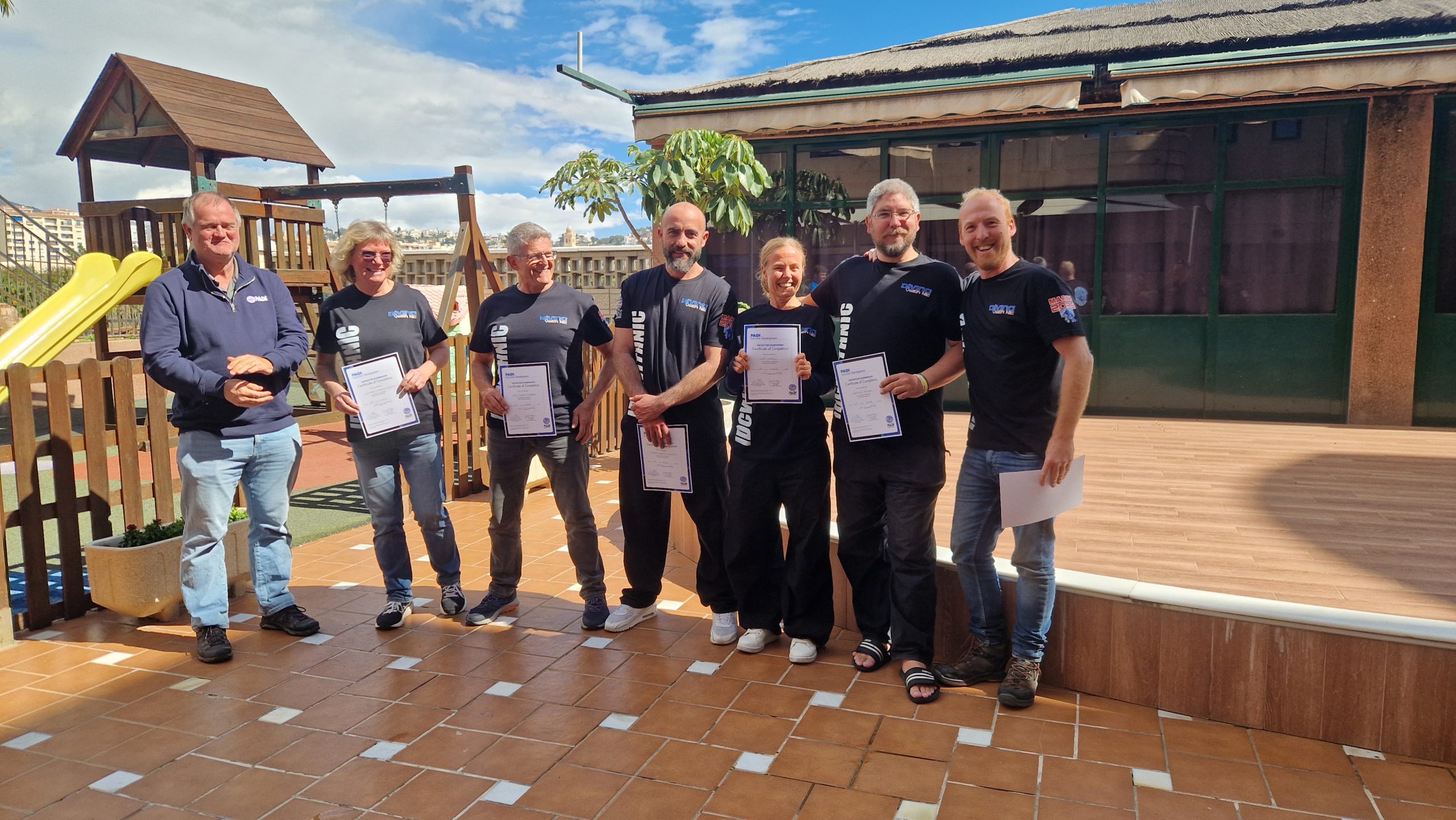
For Divemasters ready to take the next step in their professional diving career, our next PADI Instructor Development Course takes place from 9–19 November 2026, followed by the PADI Instructor Examination on 21–22 November.
The course takes place in Mijas and is available in both English and Spanish.
The IDC is where you make the transition from dive leader to dive instructor.
You will work on the knowledge, presentations, teaching techniques and in-water demonstration skills required to become a PADI Open Water Scuba Instructor, while preparing for the Instructor Examination that follows the course.
Throughout the IDC and IE, candidates are supported by our instructor team, including Nicoli Unt, PADI Silver Course Director, and IDC Staff Instructors Håkan Bengtsson and Kyriakos Argiru.
To join the IDC, candidates need to be a PADI Divemaster with at least 100 logged dives, or hold an equivalent dive-leader qualification. A current medical confirming fitness to dive and a recognised CPR/First Aid qualification from within the previous 24 months are also required.
And qualifying as an instructor does not have to be where the progression stops.
IDC and OWSI candidates can also join our 9-Specialty MSDT Prep Workshop, giving new instructors the opportunity to continue expanding their professional qualifications and the range of specialties they can teach.
If becoming an instructor has been something you have been considering for a while, this autumn could be the opportunity to turn that idea into the next stage of your diving career.
And there’s still plenty to see along the way
Of course, not every dive needs to involve skills, training or another certification.
Autumn is still a great time simply to go diving.
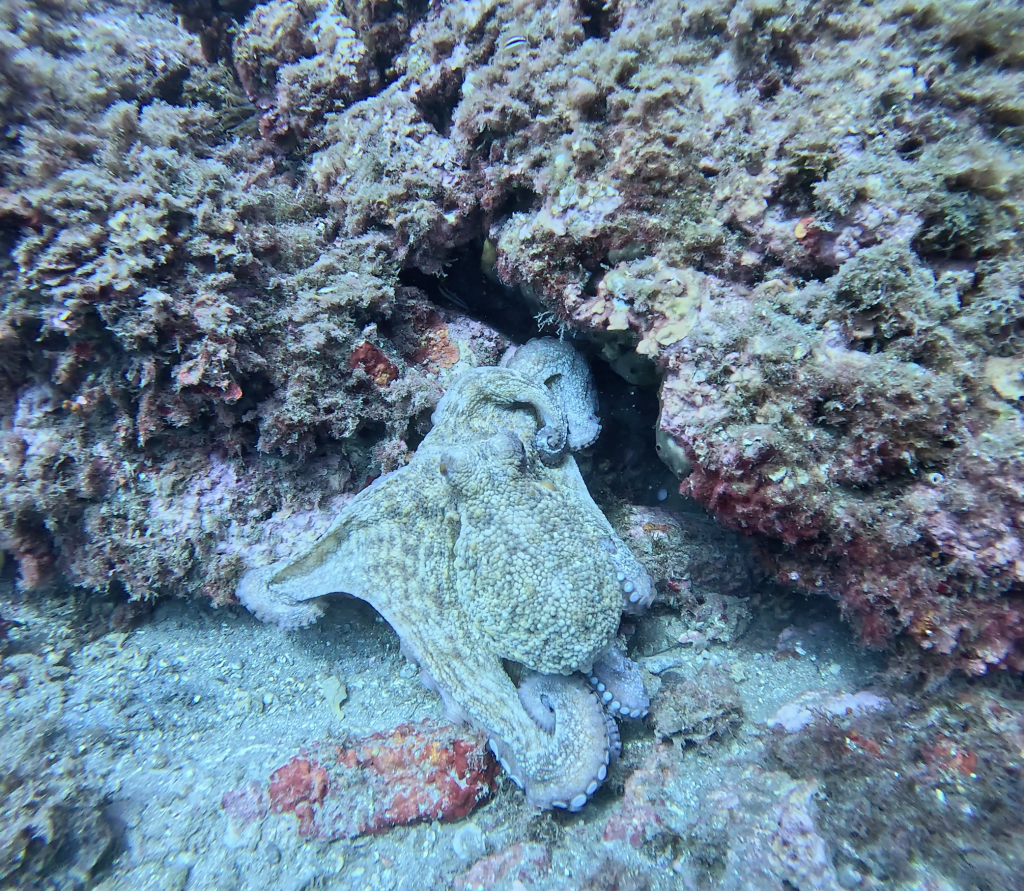
The Costa del Sol has plenty happening underwater throughout the year, and every dive is different depending on the site, conditions and, as always, a little bit of luck.
That unpredictability is part of what makes diving so addictive.
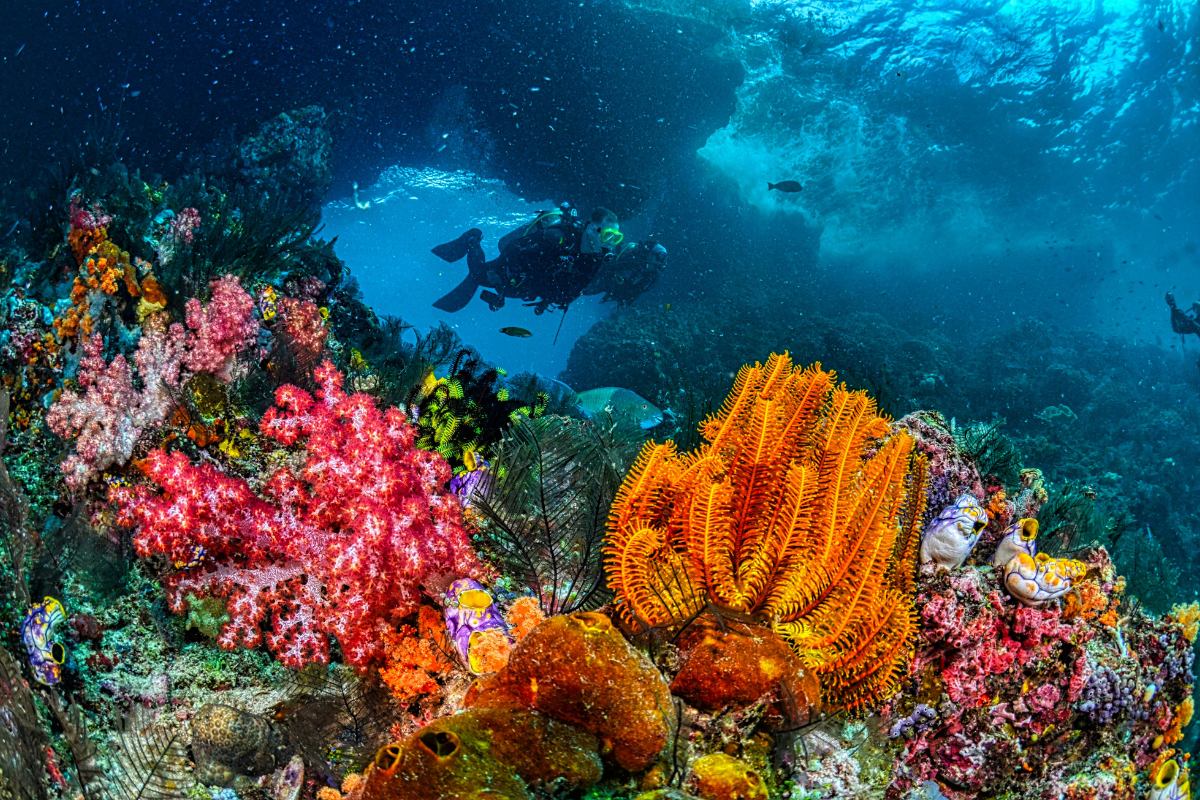
You can spend one dive concentrating on a new skill and the next simply exploring the reef, looking for marine life and enjoying being underwater.
Continuing your training doesn’t mean taking the fun out of diving.
Ideally, it gives you more confidence, more skills and more options for the dives you want to do next.
Make autumn part of your diving progression
Diving on the Costa del Sol doesn’t stop when summer ends.
Conditions change throughout the year, but autumn offers something slightly different from the busy summer months: an opportunity to keep diving, build confidence and focus on developing your skills.
For someone who has recently completed Open Water, that might mean gaining more experience and moving on to Advanced Open Water.
For another diver, it could be the right time to explore a new specialty or take on the challenge of Rescue Diver.
And for those considering a future in diving, the progression can continue further still. Our Divemaster Internship provides the opportunity to spend several weeks learning inside a working dive centre, while our next PADI Instructor Development Course begins on 9 November 2026 for Divemasters ready to work towards becoming instructors.
There is no single correct route through diving.
Some divers want to explore deeper sites. Some want to improve their skills or become more confident in the water. Others eventually decide they want to make diving their profession.
The important thing is to keep learning, keep gaining experience and choose the next step that makes sense for where you want diving to take you.
If you are unsure which course or training path is right for you, get in touch with our team at Diving with Nic. We can talk through your experience and goals and help you decide on the next step, whether that is your next recreational certification, a new specialty, Divemaster training or becoming a PADI Instructor.